What is Langar?
Langar (ਲੰਗਰ) is the community kitchen found in every Gurudwara (Sikh place of worship), where free vegetarian meals are served to all visitors regardless of religion, caste, color, creed, age, gender, or social status.
The word “langar” means “kitchen” or “community dining” in Punjabi, but it represents much more—it’s a living practice of equality, humility, service, and sharing.
The History: A Revolutionary Idea
Founded by Guru Nanak Dev Ji (1469-1539)
The first Sikh Guru, Guru Nanak Dev Ji, started the langar tradition in the late 15th century—a revolutionary concept during a time when Indian society was strictly divided by caste.
The Story Behind It: As a young boy, Guru Nanak was given money by his father to start a business. Instead, he bought food and fed hungry people, calling it “sacha sauda” (true bargain). This compassion became the foundation of langar.
Institutionalized by Guru Angad Dev Ji
The second Sikh Guru formalized langar as a mandatory institution in every Gurudwara, establishing rules that exist today.
The Revolutionary Rule by Guru Amar Das Ji
The third Guru made a powerful statement: “Pehle pangat, phir sangat” (First sit in a row to share food, then attend the congregation).
Even Emperor Akbar had to sit on the floor with common people to eat before meeting the Guru—demonstrating that before God, all are equal.
The Golden Temple Langar: By the Numbers
The Harmandir Sahib (Golden Temple) in Amritsar operates the world’s largest langar:
Daily Operations:
- 👥 100,000+ people fed daily (up to 150,000 on weekends/festivals)
- 🍽️ 24/7 operation – Never closes, even for a minute
- 🌍 All welcome – Any religion, nationality, background
- 💰 Completely free – No payment, donations voluntary
- 🥬 Vegetarian meals – Ensuring everyone can eat
Food Prepared Daily:
- 11,000 kg flour for rotis
- 3,500 kg rice
- 1,500 kg lentils (dal)
- 500 kg vegetables
- 700 kg milk for tea
- Thousands of rotis rolled and cooked continuously
Infrastructure:
- 6 large halls for dining
- Seating for 5,000 at a time
- Multiple kitchens working simultaneously
- Advanced machinery for dough mixing, roti making
- Massive utensils – giant pots holding hundreds of liters
The Menu: Simple, Nutritious, Delicious
Langar food is intentionally simple, focusing on nutrition and accessibility:
Typical Meal:
- Dal (Lentils) – Protein-rich, slow-cooked
- Sabzi (Vegetable Curry) – Seasonal vegetables
- Roti/Chapati – Fresh whole wheat flatbread
- Rice – Plain or seasoned
- Kheer – Sweet rice pudding (on special occasions)
- Chai – Hot sweet tea
Why Vegetarian? Vegetarian meals ensure everyone can eat regardless of dietary restrictions. It’s about inclusion and equality.
The Sacred Process: How Langar Works
Step 1: Preparation (Seva)
Thousands of volunteers (sewadars) work in the kitchen:
- Washing and cutting vegetables
- Kneading massive amounts of dough
- Rolling rotis by hand or machine
- Stirring huge pots of dal
- Maintaining cleanliness
Everyone participates – from wealthy businessmen to simple farmers, all work together as equals.
Step 2: Cooking
- Food cooked in massive vessels using traditional methods
- Continuous cooking to maintain fresh supply
- Quality checks at every stage
- Prepared with devotion and prayer
Step 3: Serving
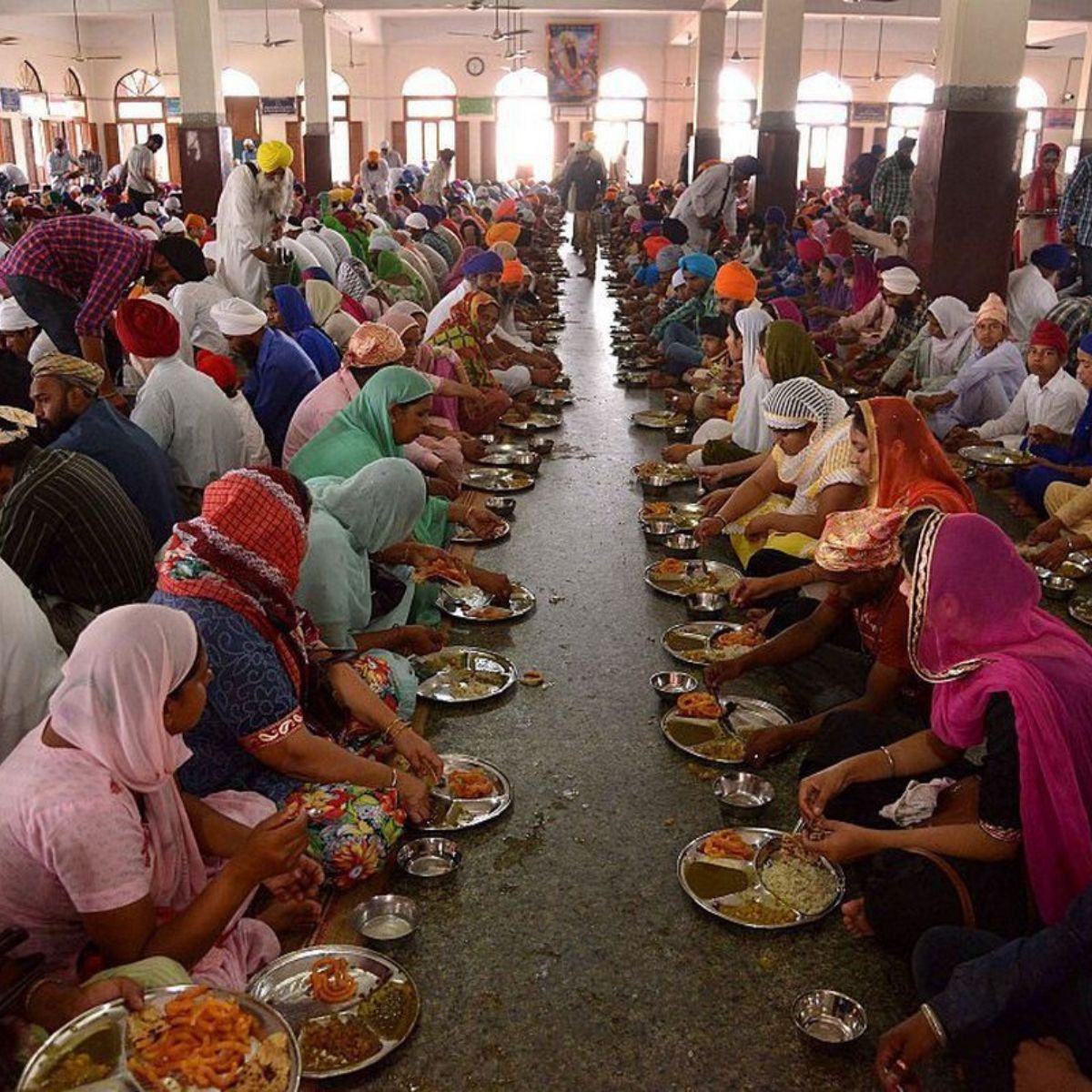
- Visitors sit in pangats (rows) on the floor
- Rich and poor sit side-by-side
- Sewadars serve food with humility
- Multiple servings offered to everyone
- No one leaves hungry
Step 4: Cleaning
- Volunteers wash thousands of utensils daily
- Halls cleaned and prepared for next batch
- Waste managed efficiently
- Zero food wastage philosophy
The Core Values of Langar
1. Equality (Sangat)
Everyone sits on the floor at the same level—no VIP sections, no special treatment. A millionaire sits next to a laborer.
2. Humility
Even serving food is done with folded hands and respect, teaching that serving others is an honor, not a duty.
3. Selfless Service (Seva)
Thousands volunteer daily without payment, considering it spiritual practice. Seva purifies the heart.
4. Sharing (Vand Chakna)
The principle of sharing what you have with others, ensuring no one goes hungry while you have plenty.
5. Dignity
Every person is treated with respect and dignity. No one is questioned, judged, or turned away.
Who Volunteers? Stories of Seva
The Businessman:
Successful entrepreneurs take time off to wash dishes, considering it spiritual enrichment more valuable than business deals.
The Tourist:
Travelers from around the world often volunteer, moved by the spirit of selfless service.
The Regular:
Many locals dedicate hours daily or weekly, making it part of their spiritual routine.
The Family:
Families come together to serve, teaching children values of humility and service.
Famous Visitor: Even celebrities and world leaders have sat on the floor and eaten langar, from politicians to Bollywood stars.
Modern Langar: Tradition Meets Technology
While maintaining traditional values, Golden Temple’s langar has embraced modern efficiency:
Technology Integration:
- Roti-making machines produce 25,000 rotis per hour
- Automated chapati makers maintain consistency
- Industrial-size appliances for large-scale cooking
- Efficient waste management systems
- Water purification for safe drinking
Sustainability Efforts:
- Solar panels for energy
- Biogas from food waste
- Rainwater harvesting
- Eco-friendly utensils
- Minimal plastic usage
During COVID-19:
Langar continued operating with:
- Packaged meals for safety
- Strict sanitization protocols
- Distribution systems for vulnerable
- Never stopped serving—even one day
Beyond Golden Temple: Langar Worldwide
The langar tradition has inspired similar initiatives globally:
Other Major Langars:
- Bangla Sahib Gurudwara, Delhi (40,000+ meals daily)
- Gurudwara Sis Ganj Sahib, Delhi
- International Gurudwaras in UK, USA, Canada, Australia
Inspired Movements:
- Community kitchens worldwide
- Free meal programs in various religions
- Disaster relief food services
- Homeless shelter meals
Impact: The langar concept has influenced how communities approach hunger relief globally.
How You Can Experience Langar
Visit Golden Temple:
- Located in Amritsar, Punjab
- Open 24/7, 365 days
- No entry fee, no meal charge
- Cover head, remove shoes
- Wash hands before entering
The Experience:
- Join the queue – Everyone waits together
- Collect your plate (thali)
- Sit in rows on the floor
- Receive food served by volunteers
- Eat mindfully with gratitude
- Return utensils to washing area
Volunteer Opportunity:
- Anyone can volunteer (just ask at langar hall)
- Tasks assigned based on comfort level
- No prior experience needed
- Most fulfilling experience you’ll have
Pro Tip: Visit early morning or late evening for a more peaceful experience. Weekends and festivals are extremely crowded.
Life Lessons from Langar
What Langar Teaches:
Humility: The wealthiest person serves and sits with the poorest Gratitude: Appreciate simple food prepared with love Equality: Before hunger and humanity, all distinctions vanish Generosity: Give without expecting anything in return Community: Strangers become family over shared meals Sustainability: Feed thousands without waste Organization: Massive operation runs smoothly through volunteer coordination
Langar’s Influence on Amritsarwala
The langar spirit deeply influences our philosophy at Amritsarwala:
Values We Share:
- Quality for all – Everyone deserves good food
- Respect in service – Serve customers with dignity
- Community focus – Food brings people together
- No waste – Efficient operations, minimal waste
- Fresh preparation – Everything made fresh with care
- Vegetarian options – Inclusive menu for all
While we operate commercially, the langar’s spirit of generosity, equality, and service guides our approach to hospitality.
Visit Amritsarwala to experience food prepared with the same love and authenticity that defines Amritsar’s food culture.